
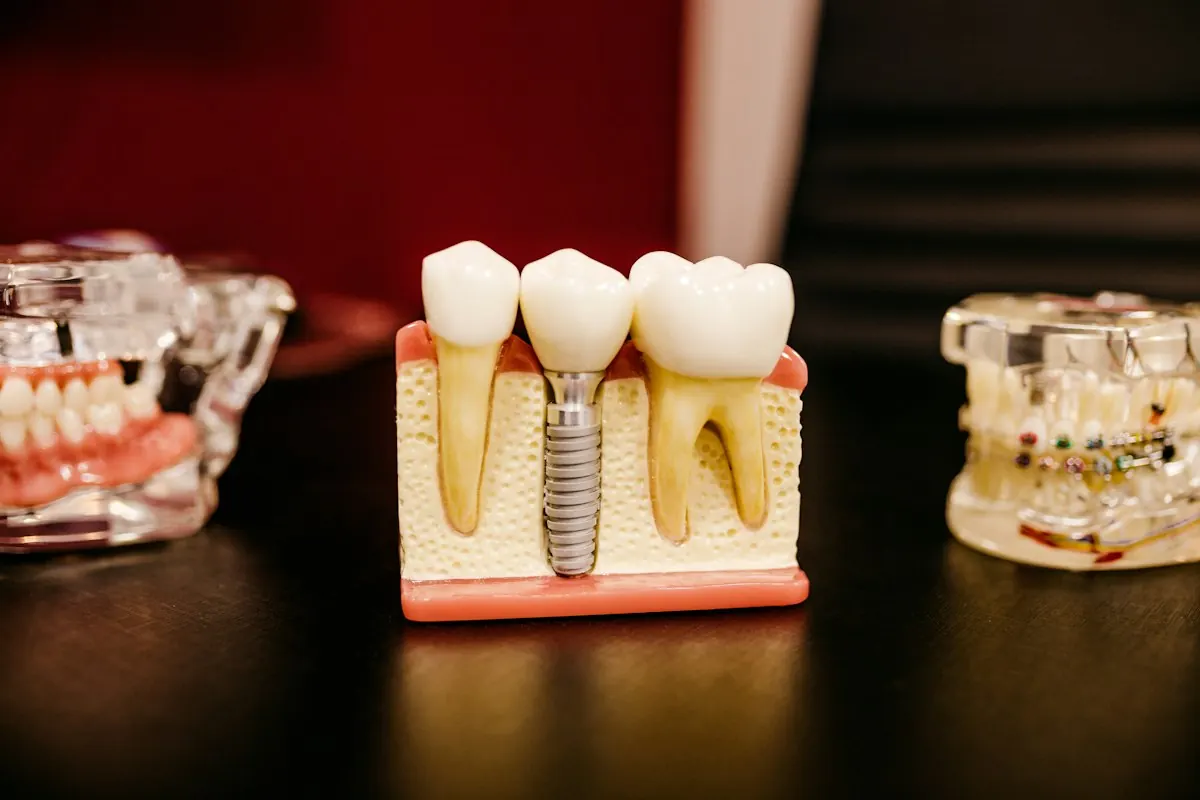
If you want more dental implant patients, start by looking at the whole route from an enquiry to an attended consultation. Advertising can create interest, but your clinic also needs a clear offer, available appointments and someone responsible for helping each person take the next step.
Meta ads for dentists means advertising across Meta platforms, including Facebook and Instagram. These campaigns can introduce your clinic to people considering implants, full-arch treatment or All-on-4. They cannot determine clinical suitability or guarantee accepted treatment.
This guide explains what to prepare, why dental leads sometimes fail to book, how to judge the numbers and what to ask a dental marketing agency before hiring one.
How to get more dental implant patients
Choose the weakest part of your current process before buying more traffic. A clinic with very few enquiries has a different problem from one with a full spreadsheet of people nobody has contacted.
| Your situation | First improvement to make |
|---|---|
| Too few people enquire | Review your offer, local visibility and advertising |
| Plenty of leads, few conversations | Check contact details, response times and follow-up ownership |
| Conversations rarely become bookings | Review expectations, location, fees and available appointments |
| People book but do not attend | Improve confirmations, directions and rescheduling |
| Consultations happen but few proceed | Review the consultation experience and reasons with the clinical team |
Start with a recent group of enquiries and follow each one through your records. Do not label every unconverted enquiry a bad lead. Someone who never received a reply needs a different fix from someone who attended and was not clinically suitable.
The American Dental Association’s guidance on prospective-patient enquiries highlights the role of phone handling in turning marketing interest into a visit. Advertising and reception need to work together.
Build a consultation offer people understand
A strong offer explains what happens next. It does not need to promise an instant smile or the lowest treatment price.
Decide which service you want to grow, which location will receive enquiries and what the first appointment includes. If you offer an initial coordinator call, describe it as a coordinator call. If a clinical assessment has a fee, explain that before the person commits.
Your page should answer:
- Who will speak with the person first?
- Is the first step a phone call, an in-person assessment or another appointment?
- Where is the clinic, and what travel is involved?
- Is there a consultation fee?
- What information will the team explain during that appointment?
- When and how will the clinic respond after the form is sent?
For full-arch campaigns, be precise about price claims. A price per arch is different from a price for both arches. A starting price for one treatment stage is different from the complete treatment cost. If you mention finance, use terms your clinic can actually offer and make relevant conditions clear.
A useful positioning statement could be: “Speak with our team about the implant consultation process, treatment planning and the next available appointment.” Your clinician should approve treatment descriptions and any outcome claims.
Do Facebook ads work for dental implants?
Facebook and Instagram ads can generate implant enquiries by giving people information before they actively search for a clinic. The commercial result depends on the offer, market, campaign, follow-up and consultation process.
For example, a clinician video could explain what happens during the first consultation. A separate ad could introduce the team and location. Another could answer a common practical question about the planning process. Each should give the viewer one clear next step.
Avoid judging the campaign only by engagement. A video can attract attention without producing useful conversations. Equally, an ad with fewer clicks may bring enquiries that are more relevant to your clinic.
Useful measures include people reached by the team, appointments booked, consultations attended and accepted treatment. Record the time between each stage so you can distinguish a weak campaign from a decision that is still in progress.
Facebook ads or Google ads for dentists?
Google Search ads can reach people already searching for a dentist or treatment. Meta advertising can introduce your clinic through visual explanations and stories while people use Facebook or Instagram.
| Question | Google Search | Facebook and Instagram |
|---|---|---|
| How does the person encounter you? | Through a search query | Through an ad in their browsing experience |
| What must your message do? | Match the service and location they searched for | Explain why the service and clinic are worth considering |
| What usually matters next? | A relevant page and an easy contact option | Clear context, trustworthy proof and a simple enquiry step |
| What should the clinic compare? | Attended consultations and acquisition cost | Attended consultations and acquisition cost |
Neither is automatically the best choice. If your budget is limited, choose a clear starting point instead of spreading it across too many treatments, locations and channels. Our Google Ads vs Meta Ads guide for dentists explores that decision in more detail.
What should a dental implant landing page include?
A visitor should not need to search your entire website to understand the ad they clicked.
Use a focused page with the treatment topic, clinic location, relevant clinician information, approved proof and a clear explanation of the consultation. Include genuine contact details and make the form easy to complete on a phone.
Keep the first enquiry form short. A name, contact details and preferred contact time may be enough to arrange a conversation. Collect clinical history, scans and other sensitive information through the clinic’s appropriate intake process, rather than an advertising form.
Check the page yourself on mobile. Tap the phone number, submit a test enquiry, read the confirmation and check that the right person receives it. A beautiful page that sends leads to an unattended inbox is not ready for more spend.
How to convert dental leads into appointments
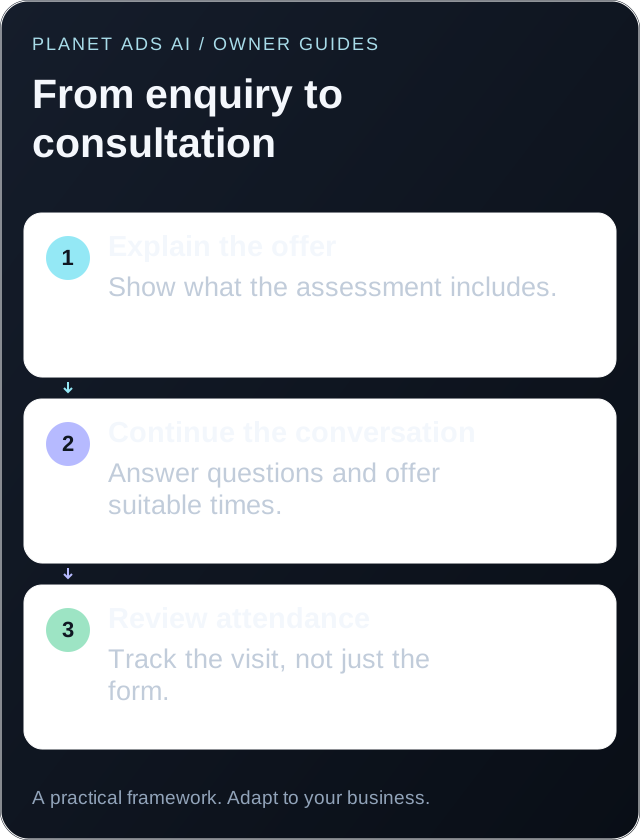
Give every enquiry a named owner and a visible status. The coordinator should know what the person saw, what they requested and what the clinic can offer next.
A practical response process is:
- Confirm that the enquiry arrived and explain when a response is expected.
- Contact the person through the agreed channel.
- Acknowledge the service they asked about.
- Answer practical questions about the consultation, location and next steps.
- Offer appropriate available appointments.
- Confirm the booking and explain how to reschedule.
- Record the outcome so the next team member has context.
Set a response target your team can meet and measure it. Do not promise immediate callbacks if the clinic has no evening coverage. If a person cannot talk, agree on a better time instead of treating the first unanswered call as a final result.
Use follow-up respectfully. Agree contact permissions, reasonable timing and when to stop. A request to stop contact should be honoured across the team’s systems.
For questions that help a coordinator arrange the next step, see our dental implant lead qualification guide. Clinical assessment stays with the dentist.
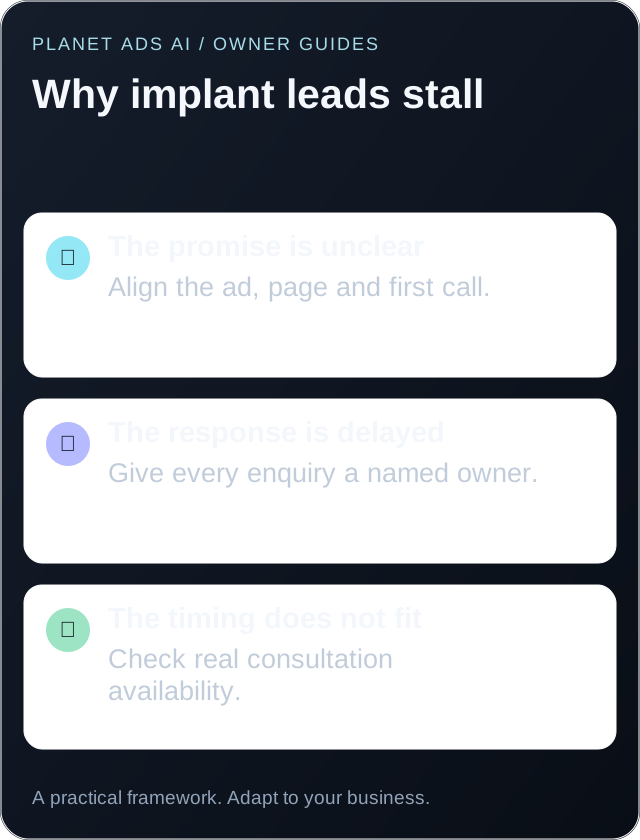
Why are my dental leads not booking?
Look at the point where people stop progressing.
They do not remember enquiring. Check whether the ad and form made the purpose clear. A low-friction form can produce submissions from people who have not fully understood the offer.
They are surprised by the price. Compare the ad, page and coordinator’s explanation. Look for missing conditions, unclear starting prices or confusion between one arch and a complete treatment plan.
They ask questions your team cannot answer consistently. Create approved practical answers and a route to the clinician for clinical questions. Guessing creates confusion.
They want an appointment you cannot offer. Review consultation capacity before increasing the budget. Long waits or unsuitable times can interrupt otherwise useful demand.
They book but do not attend. Verify the date, time, location and confirmation delivery. Make it easy to reschedule. Record cancellations separately from unexplained no-shows.
If incoming calls regularly go unanswered, read the AI receptionist guide for dental offices before assuming more advertising will solve the problem.
Measure cost per consultation and cost per patient
Use consistent definitions so your advertising report and clinic records tell the same story.
| Metric | Simple calculation |
|---|---|
| Cost per valid enquiry | Campaign costs divided by valid enquiries |
| Booking rate | Bookings divided by valid enquiries |
| Attendance rate | Attended consultations divided by bookings |
| Cost per attended consultation | Campaign costs divided by attended consultations |
| Cost per acquired patient | Campaign costs divided by acquired patients under your agreed definition |
For full-arch treatment, a patient and an arch are different units. A person receiving treatment on two arches should not silently become two acquired patients in the report. Define whether acquisition means accepted treatment, a paid deposit or treatment started, then apply that definition consistently.
Allow time for implant decisions. Report enquiries by the month they arrived and keep updating their outcomes. Dividing this month’s advertising spend by all treatment delivered this month can mix unrelated patient groups.
What should a dental clinic spend on advertising?
Work backwards from available consultations and the amount you can afford to invest while learning. Avoid choosing a media budget based only on a competitor’s claim about cheap leads.
Review consultation capacity and follow-up coverage before increasing spend. Track the same group of enquiries through to attended consultations.
What to ask a dental marketing agency
Ask how the agency will connect campaign reporting to clinic outcomes. A clear answer should cover who follows up, who updates lead status and which results you will review together.
Before committing, ask:
- Who owns and can access the advertising account and campaign assets?
- What work is included, and what is quoted separately?
- How will clinical claims and creative be approved?
- Who checks that forms, phone numbers and notifications work?
- How are duplicate enquiries and existing patients reported?
- How will the clinic share booking and attendance outcomes appropriately?
- What happens when enquiries arrive outside opening hours?
- What are the cancellation, handover and reporting arrangements?
Our Dr. Tomas video testimonial describes his experience of our marketing work with PAPADENT. It is one client’s experience, not a promise of the same result for another practice.
Protect patient information when measuring campaigns
Keep clinical records separate from advertising tracking. Meta’s Business Tools Terms restrict sending sensitive information, including health information, through its business tools. Check what your forms, URLs, tracking events and integrations actually transmit.
A change to an event name does not change the underlying information being shared. If tracking is restricted, investigate the restriction and use an appropriate measurement approach. Do not attempt to disguise treatment data to bypass it.
What a useful 2-month pilot should establish
Agree on one treatment focus, a market, a budget and follow-up responsibilities before launch. Check that the clinic can accommodate consultations and that the reporting definitions are understood by both sides.
During the pilot, review enquiry quality, contact rates, bookings, attendance and unresolved obstacles. Record treatment decisions that need more time. Two months can help evaluate the acquisition process, but cannot guarantee a fixed number of completed implant cases.
Explore dental clinic services, or discuss your dental implant campaign with your current spend, recent enquiry outcomes and consultation capacity.